<?xml version="1.0" encoding="utf-8"?>
<feed xmlns="http://www.w3.org/2005/Atom">
	<title type="html"><![CDATA[Redump Forum — PSX dumping the cdrom bios]]></title>
	<link rel="self" href="http://forum.redump.org/feed/atom/topic/13856/" />
	<updated>2014-05-09T17:56:38Z</updated>
	<generator version="1.4.4">PunBB</generator>
	<id>http://forum.redump.org/topic/13856/psx-dumping-the-cdrom-bios/</id>
		<entry>
			<title type="html"><![CDATA[Re: PSX dumping the cdrom bios]]></title>
			<link rel="alternate" href="http://forum.redump.org/post/47369/#p47369" />
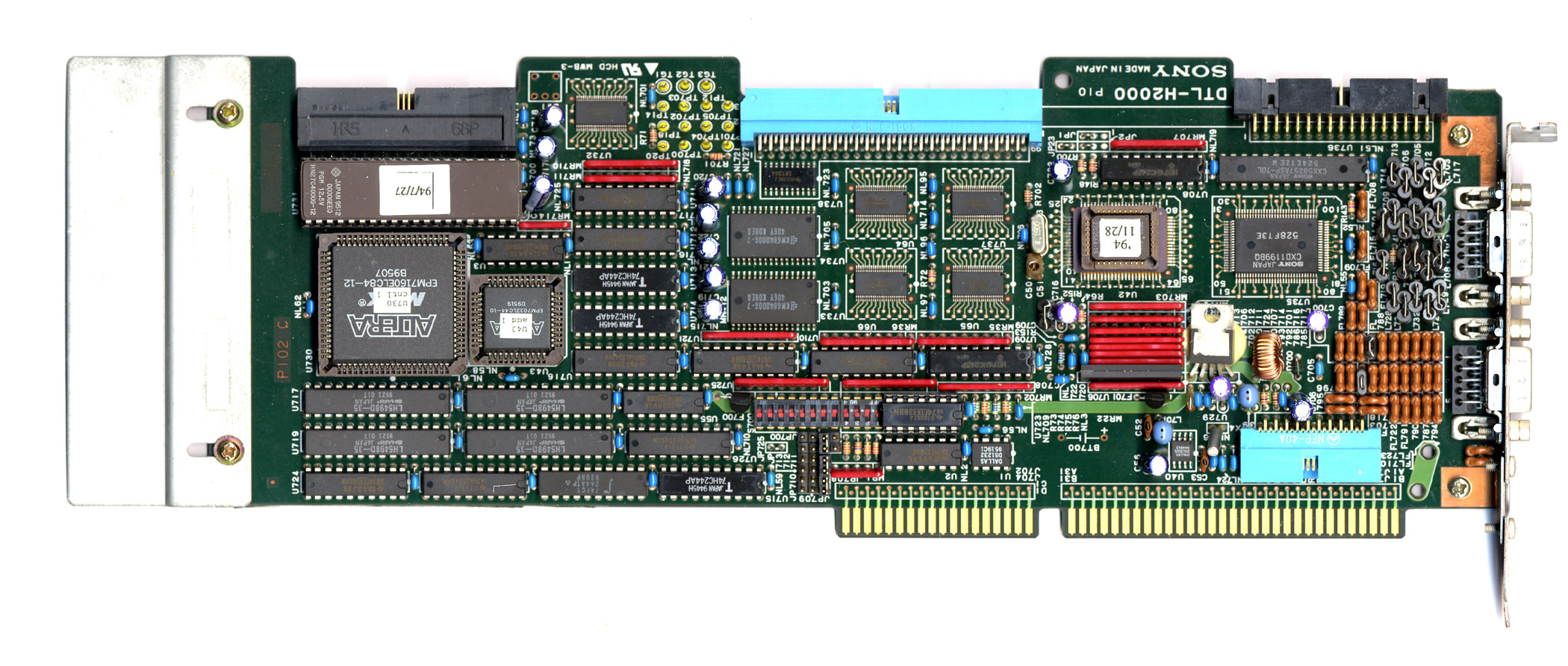
			<content type="html"><![CDATA[<div class="quotebox"><cite>Jackal wrote:</cite><blockquote><p>So is it possible to identify undumped ones by just looking at the mobo?</p></blockquote></div><p>Yes, the &quot;SC4309xx&quot; names on the 52pin chips seem to be unique for each version/region. The older 80pin chips do probably also have some unique names (current rule-of-thumb is that 80pin chips aren&#039;t dumped, not matter of their name). The dev-board EPROM version <a href="http://upload.wikimedia.org/wikipedia/commons/d/d2/DTL-H2000-CPU1_01.jpg">http://upload.wikimedia.org/wikipedia/c … PU1_01.jpg</a> has some sticker saying &#039;94 11/28, that&#039;s also undumped, despite of the EPROM socket).</p><p>NB. when looking at the mainboards: It would be very nice to take photos/scans of their front &amp; back sides. Such pictures are still quite hard to find in the internet.</p><div class="quotebox"><cite>Jackal wrote:</cite><blockquote><p>Also, can you tell us what use these dumps will be? Can they help improve emulation?</p></blockquote></div><p>The long answer is that the cdrom bios (or &quot;drive firmware&quot;) controls this stuff: <a href="http://nocash.emubase.de/psx-spx.htm#cdrominternalinfoonpsxcdromcontroller">http://nocash.emubase.de/psx-spx.htm#cd … controller</a><br />PSX games are sending commands like ReadN, SetLoc, GetStat to the cdrom sub-cpu: <a href="http://nocash.emubase.de/psx-spx.htm#cdromcontrollercommandsummary">http://nocash.emubase.de/psx-spx.htm#cd … andsummary</a> Currently, PSX emulators are using high-level emulation to reproduce that commands, although nobody really knew what those commands were doing internally. Using low-level emulation for the 8bit CPU and the attached cdrom chipset should make emulators much more accurate... <br />But, in practice, most PSX games seem to be happy with high-level emulation either (I&#039;ve emulated the whole stuff in no$psx last week (99% finished, but not yet released), and the overall effect was that it did make the the emulation slower, especially due to longer spin-up &amp; sled-move times, but it didn&#039;t fix problems with game that did hang during cdrom loading - at least I do now know that those problems seem to be related to something else than cdrom emulation).</p><div class="quotebox"><cite>Jackal wrote:</cite><blockquote><p>are you planning to release the files?</p></blockquote></div><p>Rather not. The built-in dumping function is spitting out the whole binary in form of a &quot;hexdump.txt&quot; file, but I guess there&#039;s some copyright envolved nonetheless. Anyways, it&#039;s a pretty simple DIY project to dump it.</p><p>If somebody wants to send PSX mainboards to hamburg/germany, I could dump them for you (and return the boards... as long as I don&#039;t have to bother about the postage).</p>]]></content>
			<author>
				<name><![CDATA[nocash]]></name>
				<uri>http://forum.redump.org/user/62263/</uri>
			</author>
			<updated>2014-05-09T17:56:38Z</updated>
			<id>http://forum.redump.org/post/47369/#p47369</id>
		</entry>
		<entry>
			<title type="html"><![CDATA[Re: PSX dumping the cdrom bios]]></title>
			<link rel="alternate" href="http://forum.redump.org/post/47366/#p47366" />
			<content type="html"><![CDATA[<p>Nice job!</p><p>So is it possible to identify undumped ones by just looking at the mobo?<br />I don&#039;t have soldering equipment, but I might be able to send you some mobo&#039;s if I get them back in 1 piece (live near the German border).. Anyway, I guess you already dumped most PAL models that I have here.</p><p>Also, can you tell us what use these dumps will be? Can they help improve emulation?</p><p>Finally, are you planning to release the files? I see that MESS already added the decapped one: <a href="http://www.psxdev.net/forum/viewtopic.php?f=62&amp;t=431">http://www.psxdev.net/forum/viewtopic.p … &amp;t=431</a></p>]]></content>
			<author>
				<name><![CDATA[Jackal]]></name>
				<uri>http://forum.redump.org/user/8/</uri>
			</author>
			<updated>2014-05-09T12:46:34Z</updated>
			<id>http://forum.redump.org/post/47366/#p47366</id>
		</entry>
		<entry>
			<title type="html"><![CDATA[PSX dumping the cdrom bios]]></title>
			<link rel="alternate" href="http://forum.redump.org/post/47365/#p47365" />
			<content type="html"><![CDATA[<p>The PSX is using a small 8bit Motorola CPU with onchip BIOS ROM to control the CDROM drive.<br />The first BIOS dump was done some months ago via decapping: <a href="http://wiki.psxdev.ru/index.php/SUB-CPU">http://wiki.psxdev.ru/index.php/SUB-CPU</a><br />And that dump revealed that Motorola has included a nice test mode that allows to dump its BIOS via a few wires.<br />More on that here: <a href="http://www.psxdev.net/forum/viewtopic.php?f=70&amp;t=557">http://www.psxdev.net/forum/viewtopic.p … &amp;t=557</a> (for the wiring diagram skip ahead to this post: <a href="http://www.psxdev.net/forum/viewtopic.php?f=70&amp;t=557#p4174">http://www.psxdev.net/forum/viewtopic.p … =557#p4174</a> )<br />For the whole PSX series, there should be around 25 different CDROM BIOS versions (for different regions and different revisions). Currently only 4 versions are dumped.<br />If you get some wires together, then there&#039;s still a good chance that you can be the first person viewing the binary for one of the missing versions.</p>]]></content>
			<author>
				<name><![CDATA[nocash]]></name>
				<uri>http://forum.redump.org/user/62263/</uri>
			</author>
			<updated>2014-05-09T12:19:12Z</updated>
			<id>http://forum.redump.org/post/47365/#p47365</id>
		</entry>
</feed>